What Is the Smart Family Card? (ফ্যামিলি কার্ড কি?)
Bangladesh is entering a transformative era of digital social welfare. For years, the distribution of essential subsidies—rice, oil, and cash allowances—relied on paper-based lists that were riddled with errors, duplicate entries, and “ghost beneficiaries” who received benefits they were never entitled to.
That era is now ending.
On March 10, 2026, the Ministry of Social Welfare (সমাজকল্যাণ মন্ত্রণালয়) will officially launch the Smart Family Card (স্মার্ট ফ্যামিলি কার্ড) — a QR-coded digital identity and benefit delivery card designed to replace the old Trading Corporation of Bangladesh (TCB) paper cards. This landmark initiative, to be inaugurated by Prime Minister Tareq Rahman, is not merely a subsidy program. It is the first concrete step toward Bangladesh’s ambitious Universal Social ID Card target for 2030.
If you are searching for the ফ্যামিলি কার্ড আবেদন লিংক (Family Card application link), eligibility criteria, or the step-by-step registration process, this is your complete, authoritative guide.
What Is the Smart Family Card?
The Smart Family Card (also commonly searched as familycard, family card BD, or TCB smart family card) is a government-issued digital card that serves two functions simultaneously:
- A Digital Identity Proof — each card carries a unique QR code linked to the National ID of the household head
- A Benefit Delivery Mechanism — it channels monthly cash assistance directly to the enrolled family’s bank or Mobile Financial Services (MFS) account
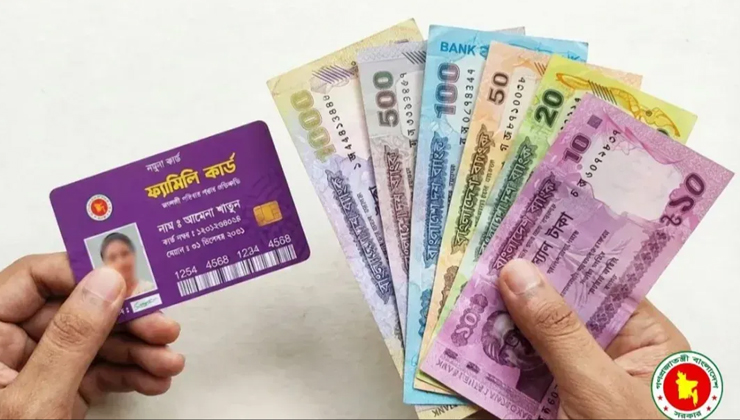
Unlike the previous physical TCB ration cards, the Smart Family Card eliminates manual distribution. The government transfers cash directly from government to person (G2P), removing every middleman from the equation.
Core Benefits at a Glance
| Benefit | Details |
|---|---|
| Monthly Cash Amount | ৳2,500 BDT per enrolled family |
| Payment Channel | Bank account or Mobile Banking (bKash, Nagad, Rocket) |
| Card Technology | QR-coded Smart Card (unique per household) |
| Selection Method | Proxy Means Test (PMT) Score |
| Oversight Body | Ministry of Social Welfare (সমাজকল্যাণ মন্ত্রণালয়) |
| Official Website | familycard.gov.bd |
The monthly ৳2,500 BDT is designed as an inflation buffer against rising costs of daily essentials like rice, cooking oil, and lentils — the items that hit low-income households the hardest.
Launch Timeline: When Does the Family Card Program Start?
The government has chosen a strategic Piloting Phase approach before a nationwide rollout. Here is the complete timeline:
Phase 1 – The Pilot Launch (March 10, 2026)
- Official Launch Date: March 10, 2026
- Coverage: 14 selected Upazilas across Bangladesh
- Initial Beneficiaries: Approximately 6,500 families
- Budget Allocated: Nearly ৳2 Crore Taka for the pilot phase
- Inaugurated By: Prime Minister Tareq Rahman
Phase 2 – Nationwide Expansion (Mid-2026 Onwards)
After the pilot, the government will conduct a four-month monitoring period to evaluate data accuracy, payment delivery success rates, and system performance. Following a successful review, the program will scale up to cover every Upazila in Bangladesh — eventually targeting millions of low-income households nationwide.
Important: If you are not in one of the 14 pilot Upazilas, you will not be enrolled in Phase 1. However, keeping your NID and mobile banking accounts updated now is essential for smooth enrollment when your Upazila is included.
Eligibility Criteria: Who Can Get the Smart Family Card?
Understanding who qualifies is the most critical part of the family card registration process. The selection is intentionally strict to ensure limited resources reach the genuinely vulnerable.
Priority Groups — Who Is Eligible?
The Ministry of Social Welfare has designated the following groups as high-priority during the door-to-door data collection phase:
- Landless & Homeless Families — Households with no physical land or permanent residential address
- Widows and Female-Headed Households — Women who are the sole income earners supporting children or dependents
- Families with Disabled Members — Households caring for individuals with physical or mental disabilities
- Third Gender / Hijra Community — Recognizing the need for social inclusion for the transgender and Hijra communities of Bangladesh
Exclusion Criteria — Who Is Ineligible?
To maintain the integrity of the program, the following categories are strictly excluded from receiving a Smart Family Card:
- Government Employees — Current active government workers or retired individuals receiving a government pension
- Established Business Owners — Individuals holding a valid trade license with a stable business income
- Luxury Asset Owners — Households that own an Air Conditioner (AC) or a Private Car are automatically disqualified
The Joint/Large Family Exception
Standard policy grants one Smart Family Card per household. However, the government acknowledges the economic realities of large joint families.
The rule: Any household with more than 5 members may qualify for additional support. For example, a household of 10 members is eligible to apply for and receive 2 Smart Family Cards, providing a combined monthly benefit of ৳5,000 BDT.
The PMT Selection System: How Does the Government Decide Who Is Poor?
This is the technical backbone of the Smart Family Card program — the Proxy Means Test (PMT). Many people searching for “family card ki” or “what is family card in Bangladesh” are actually asking this deeper question: how does the selection work?
What Is the Proxy Means Test (PMT)?
Instead of simply asking “How much do you earn?” — a question easily manipulated — the PMT system evaluates observable, verifiable indicators of poverty. These “proxies” collectively create a poverty score for each household.
The PMT evaluates the following indicators:
| Indicator | What Is Assessed |
|---|---|
| Housing Quality | Wall/roof materials: tin, bamboo, mud, or brick? |
| Asset Ownership | Does the household own a refrigerator, TV, or livestock? |
| Education Level | Highest academic qualification of any adult household member |
| Household Demographics | Number of children under 5, elderly members, and disabled individuals |
| Land Ownership | Amount of agricultural land (if any) |
A trained 1st-layer Upazila government officer visits the household in person, collects this data, and enters it directly into the government’s digital system. The software automatically calculates a PMT Score. Households scoring below a defined poverty threshold are flagged for inclusion in the Smart Family Card program.
This approach makes it significantly harder to cheat the system compared to old manual methods.
How to Apply for the Smart Family Card (ফ্যামিলি কার্ড আবেদন): Step-by-Step Process
Many people searching for “family card apply online Bangladesh 2026” or “ফ্যামিলি কার্ড অনলাইন আবেদন 2026” expect a self-service web portal. Here is the important clarification:
There is currently no public self-apply website for the Smart Family Card pilot phase. The government is using a proactive, officer-led door-to-door data collection model during Phase 1.
However, here is exactly what you need to do:
Step 1: Wait for the Government Officer’s Visit
In the 14 pilot Upazilas, designated government representatives are visiting households door-to-door. You do not need to go anywhere. The officer comes to you.
Step 2: Prepare Your Required Documents
Have the following mandatory documents ready before the officer arrives:
| Document | Details |
|---|---|
| NID Card | National ID card of the household head (preferably the mother or senior woman of the house) — original + photocopy |
| Photographs | Recent color passport-sized photographs (2 copies recommended) |
| Active Mobile Number | A SIM card registered under the same NID used for the application |
| MFS Account | Your bKash / Nagad / Rocket account must be linked to the same NID |
Pro Tip: The Ministry strongly recommends that the mother or female head of the household be the primary cardholder, as the program prioritizes empowering women as the financial managers of their families.
Step 3: Data Verification by the Ministry
Once the officer submits your data, it goes through a rigorous cross-verification process:
- Your NID is checked against the national database
- The system flags any duplication with other social safety net programs (Old Age Allowance, Widow Allowance, etc.)
- If everything is clean, your application status moves to “Approved”
Step 4: Smart Card Printing & SMS Notification
After verification, your household data is “locked” in the system and a QR-coded Smart Family Card is printed with your unique identification. You will receive an SMS notification on your registered mobile number with instructions on:
- Where to collect your physical card
- Your schedule for the first monthly payment
Family Card Registration Link & Official Website
For verified information and future online registration portals (expected for Phase 2), always use the official government resources:
- Official Portal: familycard.gov.bd
- Ministry: Ministry of Social Welfare, Bangladesh (সমাজকল্যাণ মন্ত্রণালয়)
- TCB Smart Card Service: tcbsheba.com (for TCB-related queries)
Warning: Many fraudulent websites are claiming to offer a “ফ্যামিলি কার্ড আবেদন লিংক” or application form. Only trust familycard.gov.bd as the official source. Do not share your NID or mobile number on unofficial third-party sites.
The Vision for 2030: The Universal Social ID Card
The Smart Family Card is the foundation of something far larger. The Bangladesh government has set a national target: by 2030, all individual welfare cards — including:
- Old Age Allowance Card (বয়স্ক ভাতা কার্ড)
- Widow Allowance Card (বিধবা ভাতা কার্ড)
- Disability Allowance Card (প্রতিবন্ধী ভাতা কার্ড)
- TCB Family Card
…will be merged into a single Universal Social ID Card.
This unified card will serve as a dynamic, living record of a citizen’s socioeconomic status. As a family’s income rises and they move out of poverty, the system will reflect this change — freeing up resources for other families who need support. This creates a self-correcting, fair, and data-driven social safety net unlike anything Bangladesh has had before.
Quick Reference: Smart Family Card 2026 at a Glance
| Feature | Details |
|---|---|
| Launch Date | March 10, 2026 |
| Monthly Benefit | ৳2,500 BDT per family |
| Payment Method | bKash / Nagad / Rocket / Bank (G2P) |
| Card Type | QR-coded Smart Card |
| Documents Needed | NID + Photo + Active Mobile Number |
| Priority Groups | Landless, Disabled, Widows, Low-income Mothers |
| Ineligible | Govt. Employees, AC/Car Owners, Trade License Holders |
| Phase 1 Coverage | 14 Upazilas (~6,500 families) |
| Authority | Ministry of Social Welfare (সমাজকল্যাণ মন্ত্রণালয়) |
| Official Site | familycard.gov.bd |
| 2030 Goal | Universal Social ID Card |
Frequently Asked Questions (FAQ)
Q1: What is the Smart Family Card? (ফ্যামিলি কার্ড কি?)
The Smart Family Card (স্মার্ট ফ্যামিলি কার্ড) is a QR-coded digital card issued by the Ministry of Social Welfare, Bangladesh. It entitles enrolled low-income families to receive ৳2,500 BDT per month directly into their mobile banking or bank accounts. It replaces the old TCB paper-based subsidy system.
Q2: Is there a family card apply online link for Bangladesh 2026?
As of the pilot launch on March 10, 2026, there is no public self-apply online portal. Enrollment is conducted through government officer home visits in the 14 pilot Upazilas. An online registration portal is expected for Phase 2 (mid-2026 onwards) at familycard.gov.bd.
Q3: What documents do I need for family card registration (ফ্যামিলি কার্ড আবেদন ফরম)?
You need: (1) NID card of the family head, (2) Recent passport-sized photographs, (3) An active mobile number registered to the same NID, and (4) A bKash, Nagad, or Rocket account linked to your NID.
Q4: Who is the family card for? (Family card kara pabe?)
The card is for landless families, widowed women, families with disabled members, the Hijra/third gender community, and low-income households who score below the PMT poverty threshold. Government employees, car/AC owners, and trade license holders are excluded.
Q5: What is the official family card website (familycard.gov.bd)?
The official portal is familycard.gov.bd, operated by the Ministry of Social Welfare, Bangladesh. Always verify that you are using this official link before submitting any personal information.
Q6: Can a large family get two Smart Family Cards?
Yes. Households with more than 5 members may qualify for 2 Smart Family Cards, receiving a combined ৳5,000 BDT per month.
Q7: What is TCB Smart Family Card (টিসিবি স্মার্ট ফ্যামিলি কার্ড)?
The TCB Smart Family Card refers to the Smart Family Card under the umbrella of TCB (Trading Corporation of Bangladesh) social safety programs. It is the same card, now rebranded and upgraded from the older TCB paper ration card to a fully digital, QR-based smart system.
Q8: When will the Family Card program cover all of Bangladesh?
Phase 1 covers 14 Upazilas from March 10, 2026. After a 4-month review, the program will expand to cover all Upazilas across Bangladesh, expected around mid-to-late 2026.
Conclusion
The Smart Family Card Bangladesh 2026 launch on March 10 represents one of the most significant modernizations in Bangladesh’s social welfare history. By combining QR-coded digital cards, mobile banking payment rails, and a scientifically designed PMT scoring system, the Ministry of Social Welfare is building a corruption-resistant, data-driven safety net for the country’s most vulnerable citizens.
If you are in one of the 14 pilot Upazilas, act now: ensure your NID is up to date, your mobile number is registered in your name, and your bKash/Nagad/Rocket account is linked to your NID. When the government officer visits your door, you will be ready.
For everyone else across Bangladesh — your time is coming. The Smart Family Card is not just a card. It is the foundation of a more equitable, transparent, and digitally empowered Bangladesh by 2030.
📌 Bookmark this page for updates. As the program expands and an online registration portal becomes available at familycard.gov.bd, this article will be updated with the latest ফ্যামিলি কার্ড আবেদন লিংক and step-by-step guidance.